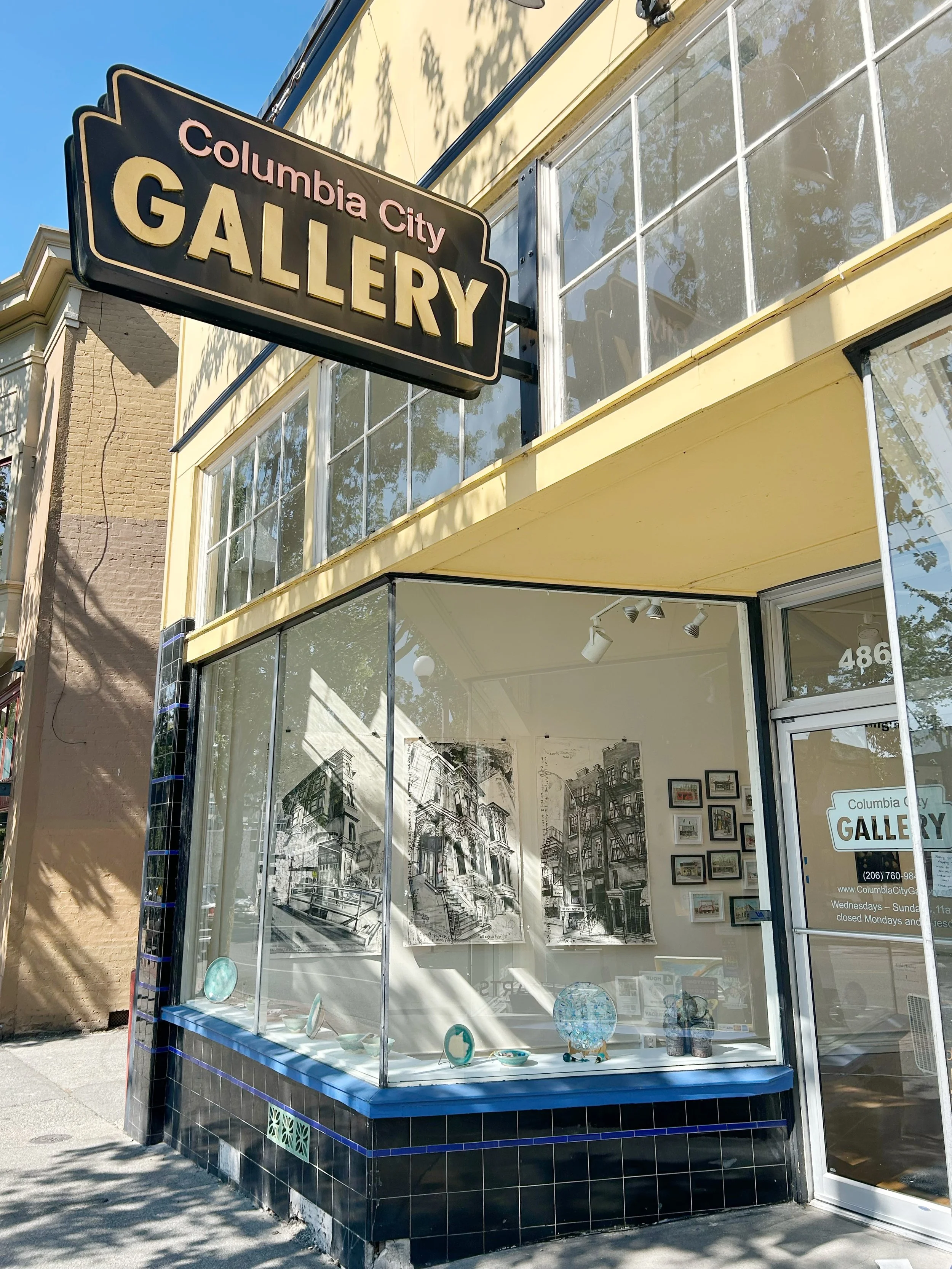
Why Stone Lithography Still Has My Heart
The Prints That Never Really Left
One unexpected joy of this exhibition has been the conversations happening around my stone lithographs.
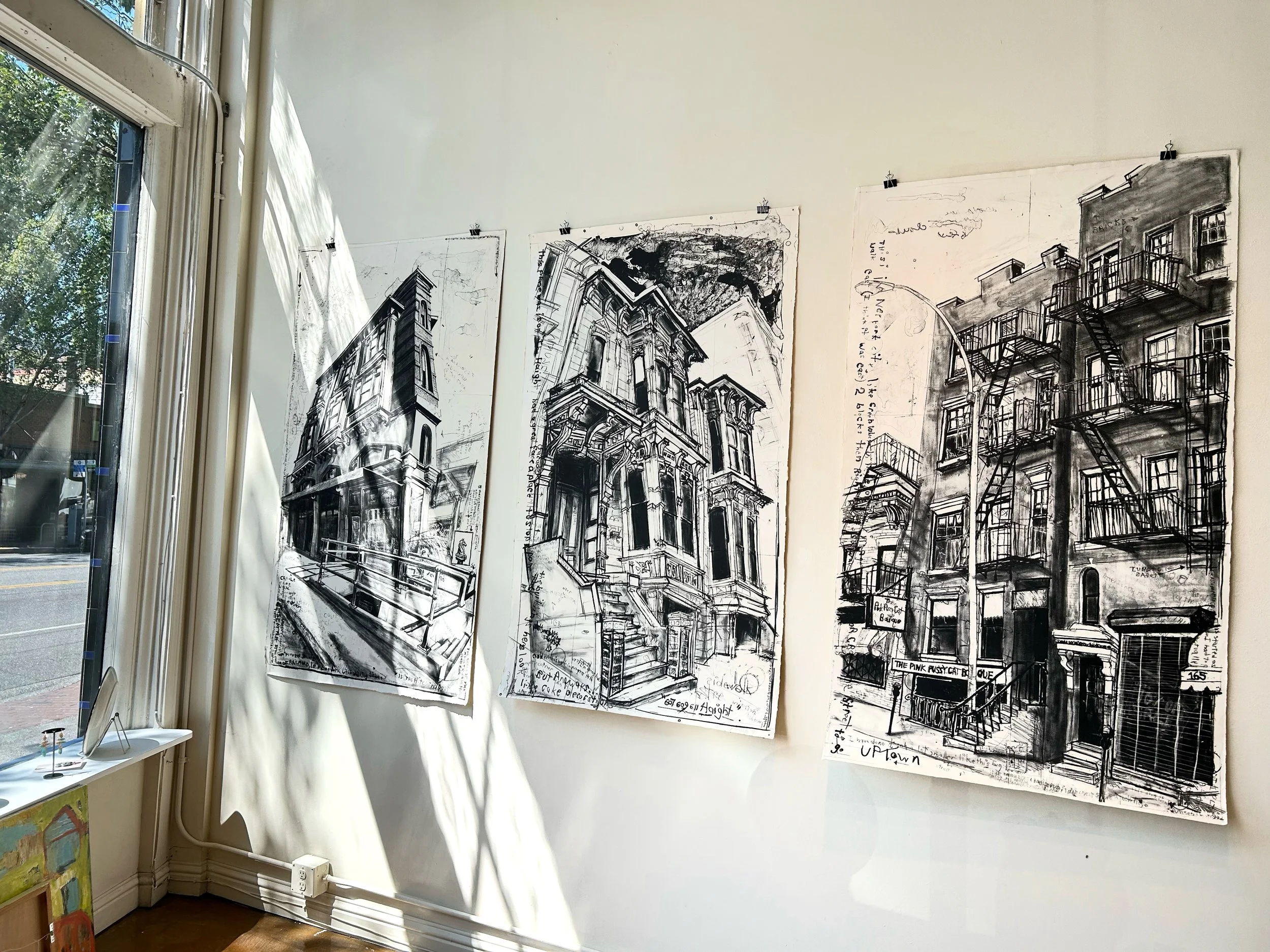
Original Stone Lithographs 5’x3’
People often walk into the gallery assuming they're looking at reproductions. When I explain that each one is an original print—not a copy of a drawing or painting—the conversation usually takes an interesting turn.
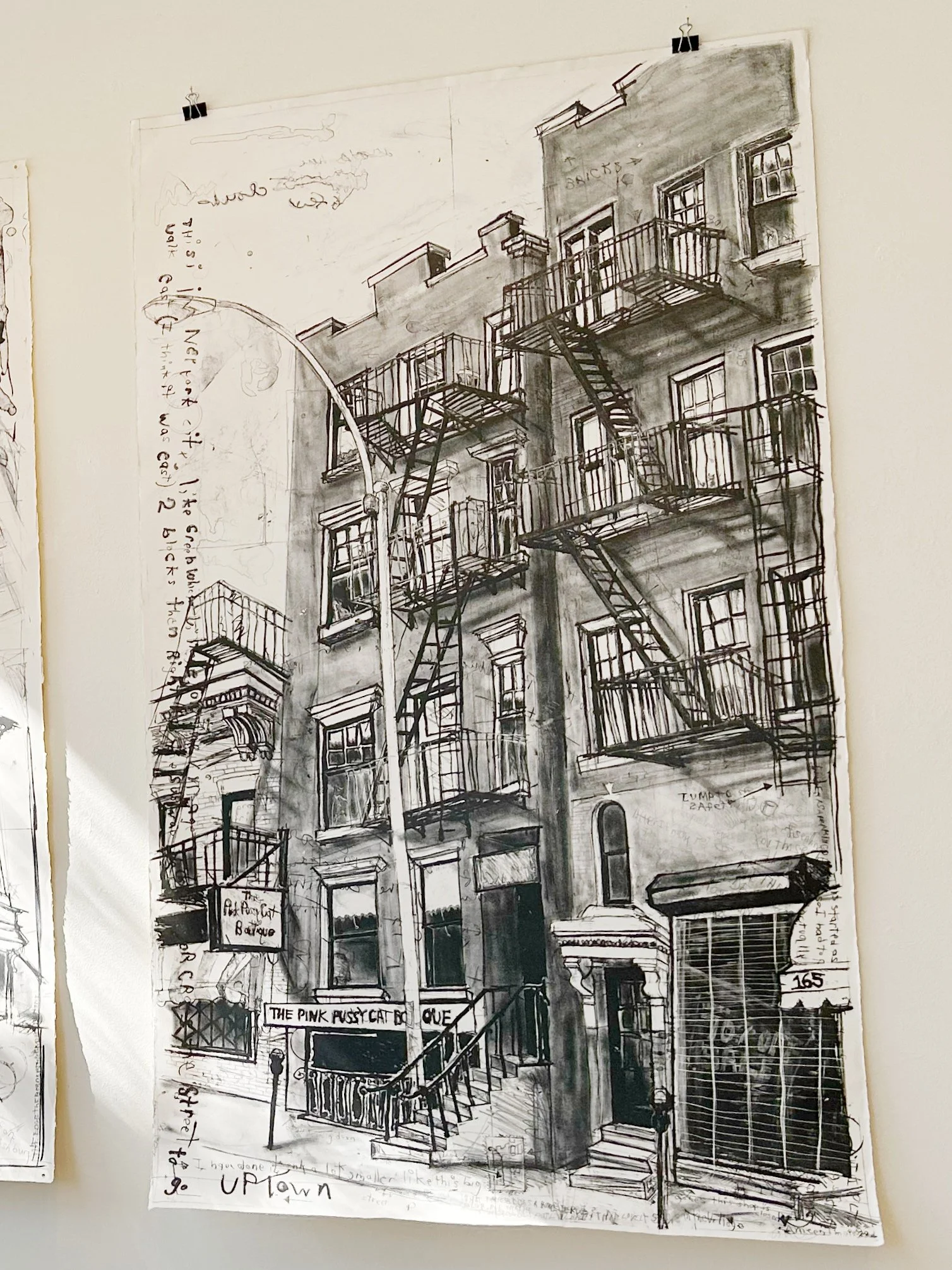
The Pink Pussy Cat - New York Original Lithograph 5’x3’
Stone lithography was invented in 1796 by Alois Senefelder and remains one of the most technically demanding and labor-intensive printmaking processes ever developed. Each image is hand drawn directly onto a finely polished limestone (or marble) surface, then chemically processed, hand inked, and printed one impression at a time. I was fortunate to study lithography at Emily Carr University of Art + Design under Bob Evermon, who pioneered printing on marble. We had the extraordinary privilege of working on two massive Carrara marble slabs—each just over 3 by 5 feet and nearly 5 inches thick—that Bob had personally imported from Italy. After graduating, I was invited back to Emily Carr several times as a guest artist to create large-scale lithographs on those same stones. Today, stone lithography is practiced by relatively few artists and workshops, making it an increasingly rare art form. Each color requires its own stone, its own registration, and another pass through the press. It's a slow, physical, wonderfully demanding process.
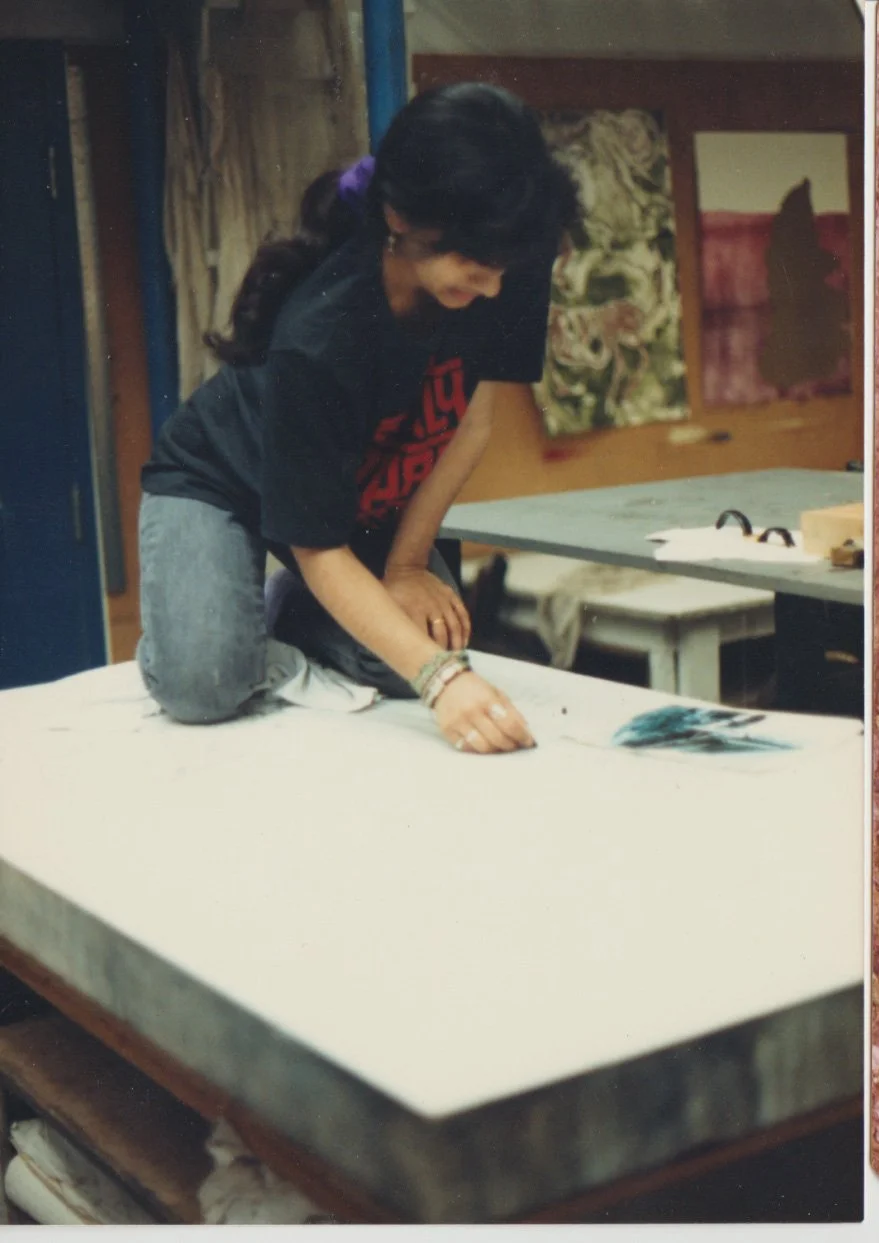
Me! Sitting on a Marble Lithography stone starting a drawing…circa 1989
The word "print" can be confusing because it describes two very different things. My small Seattle watercolors are available as high-quality giclée reproductions, and I'm always very clear about that. They faithfully reproduce the original painting and make my work more accessible.
Stone lithographs are something entirely different. The print itself is the original artwork. There is no painting that came first.
Even many artists haven't had the opportunity to learn the difference, so I love being able to share the process. Printmaking was my first artistic love, and it still feels like home. Whenever I travel, I inevitably seek out local print studios. I can't resist stepping inside, breathing in that unmistakable smell of ink, and peeking around to see what presses are running.
Some things never really leave you. For me, printmaking is one of them.